
Are you stuck in the minor pentatonic scale?
Or new to soloing over major blues?
If so ~ this is the place to start :)
The crucial thing that many newbies don't realise is that the music changes key with every chord change.
However - Take heart! The difference is only one note with each change, and I'll show you how to 'follow the changes' so you really know what you're doing.
This tutorial video fully explains this, so grab your guitar and select play:
Here is a chord chart for a basic major blues:
| A7 / / / | D7 / / / | A7 / / / | A7 / / / |
| D7 / / / | D7 / / / | A7 / / / | A7 / / / |
| E7 / / / | D7 / / / | A7 / D7 / | A7 / E7 / |
Below are box diagrams for the three scales featured throughout the video. Firstly the mixolydian mode, played from the 5th fret for the key of A:

Next is the dorian mode, played from the 5th fret for the key of A:

...and finally the major scale, played from the 5th fret for the key of A:
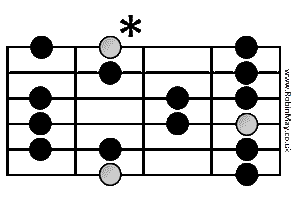
It will really support you in knowing which notes are where if you learn which intervals are across a single fret. What I mean is that if the ROOT note is on the sixth string then:
the FOURTH is on your fifth string (at the same fret)
the FLATTENED SEVENTH is on your fourth string
the FLATTENED THIRD is on your third string
the FIFTH is on your second string
the ROOT is also on your first (top/thinnest) string
Ideally you'll learn all the intervals within the major scale. As a starting point I encourage you to recognise that the major third is one fret up from the minor third and one fret down from the fourth.
Here is the backing track I use throughout most of the video:
You can download it here for free :)
The track I play over during the intro is called, 'Ninth Blues' and you can play it for free on my Backing Tracks page, or on the site-wide player at the base of each page (below).
< Back to all posts
Or new to soloing over major blues?
If so ~ this is the place to start :)
The crucial thing that many newbies don't realise is that the music changes key with every chord change.
However - Take heart! The difference is only one note with each change, and I'll show you how to 'follow the changes' so you really know what you're doing.
This tutorial video fully explains this, so grab your guitar and select play:
Here is a chord chart for a basic major blues:
| A7 / / / | D7 / / / | A7 / / / | A7 / / / |
| D7 / / / | D7 / / / | A7 / / / | A7 / / / |
| E7 / / / | D7 / / / | A7 / D7 / | A7 / E7 / |
Below are box diagrams for the three scales featured throughout the video. Firstly the mixolydian mode, played from the 5th fret for the key of A:
Next is the dorian mode, played from the 5th fret for the key of A:
...and finally the major scale, played from the 5th fret for the key of A:
It will really support you in knowing which notes are where if you learn which intervals are across a single fret. What I mean is that if the ROOT note is on the sixth string then:
the FOURTH is on your fifth string (at the same fret)
the FLATTENED SEVENTH is on your fourth string
the FLATTENED THIRD is on your third string
the FIFTH is on your second string
the ROOT is also on your first (top/thinnest) string
Ideally you'll learn all the intervals within the major scale. As a starting point I encourage you to recognise that the major third is one fret up from the minor third and one fret down from the fourth.
Here is the backing track I use throughout most of the video:
You can download it here for free :)
The track I play over during the intro is called, 'Ninth Blues' and you can play it for free on my Backing Tracks page, or on the site-wide player at the base of each page (below).
< Back to all posts